



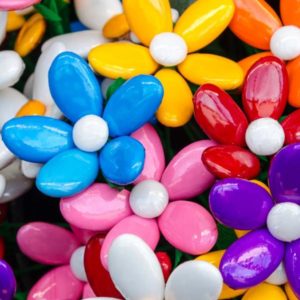

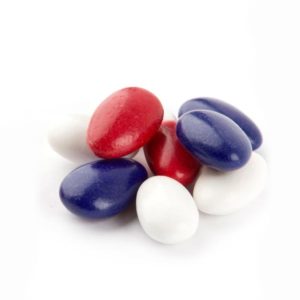
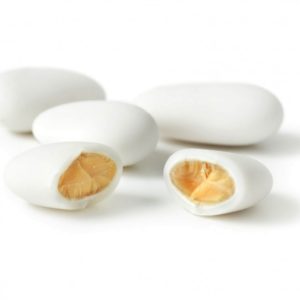


Gum Arabic is widely recognized in confectionery technology as one of the most effective natural film-formers used in dragee coating. When it is removed from the formulation, several quality issues begin to appear, both during processing and throughout storage.
1. Poor Film Formation and Surface Defects
Without gum Acacia, the coating layer lacks uniformity. The core becomes more difficult to cover, leading to:
- uneven surface texture
- weak adhesion between layers
- increased risk of cracking during polishing
This directly affects the visual quality and mechanical stability of dragees.
2. Increased Fat Migration
Nuts, centers with oils, or praline fillings naturally contain fat. Without gum arabic acting as a barrier:
- lipids migrate into the chocolate coating
- fat bloom and whitening appear
- texture softens or becomes gritty over time
Fat migration is one of the main reasons dragees lose shelf life and turn visually unattractive.
3. Reduced Gloss and Lower Aesthetic Quality
Gum arabic plays a key role in producing a smooth, shiny finish.
Without it:
- polishing becomes inefficient
- gloss level drops significantly
- dragees appear matte or dusty
This is critical for premium confectionery where appearance influences consumer perception.
4. Shorter Shelf Life and Higher Defect Rate
The combined effects—cracking, fat migration, surface dullness—lead to:
- decreased product stability
- higher rejection rates in production
- reduced shelf life
Therefore, gum Acacia is essential not only for appearance but also for functional performance in dragee manufacturing.